Sabbath
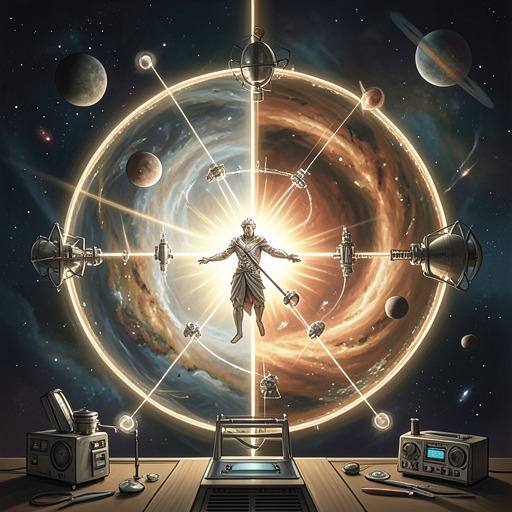
Paradise LostSabbath is the seventh day of the Creation week, set apart after God has completed the making of Heaven, Earth, and their living orders. It does not merely interrupt labor: it gathers the six preceding days into a consecrated pattern, confirms the goodness of the created world, and becomes the first recurring measure by which creation is understood as ordered rather than chaotic.## Completion of CreationThe Sabbath follows the sixth day on which God creates Adam and establishes humanity’s appointed place within the world. Adam is formed from dust, receives the breath of life, and is made in the image of God; Eve is created as his female consort, and mankind is blessed with the command to be fruitful, multiply, fill the Earth, subdue it, and exercise dominion over living creatures. The world is therefore complete in both its natural variety and its human stewardship before the seventh day begins. The prohibition against eating from the Tree of Knowledge of Good and Evil remains the single stated limit within the abundance of Eden: the fruit is forbidden, and death is declared its penalty. Sabbath arrives after this finished work has been viewed as entirely good, giving the created order a temporal seal as well as a material form.## The Seventh Evening in EdenThe seventh evening rises in Eden after the Sun has set and twilight advances from the East. At the same time, the Son of God returns to the high-seated throne of Heaven and sits with God, who rests from the work ordained and completed through him. The rest is not represented as exhaustion or withdrawal from sovereignty. God remains present everywhere, and the Son of God, though invisible, remains with the Father while the completed world is contemplated from the divine abode. The seventh day is thus a cessation from creative labor without being a cessation of divine attention.## Heavenly CelebrationSabbath is kept through an immense act of celestial music rather than through silence. Harps, solemn pipes, dulcimers, organs, and choral voices sound together while clouds of incense rise from golden censers and veil the mount. The Celestial Hierarchies sing of the Creation and the acts of the six days, praising God’s immeasurable power and declaring creation greater than the destruction of created rebels. Their hymn interprets the Sabbath as a theological reading of history: the defeat of the Rebel Angels does not diminish God, because the evil of apostate spirits is turned toward the production of greater good. The new-made world, founded near Heaven upon the clear Hyaline Sea, becomes evidence that divine power can answer rebellion through further creation rather than mere negation.## Humanity Under the Sabbath OrderThe celestial song identifies Earth, surrounded by its lower ocean, as the dwelling place of humanity. Men are called thrice happy because they are created in God’s image, appointed to dwell on Earth, worship their creator, rule over the works of Earth, sea, and air, and multiply a race of holy and just worshippers. Yet their happiness is conditional: they must know it and persevere upright. Sabbath therefore carries an implicit ethical demand. It celebrates the goodness of the world while placing human freedom within a pattern of grateful worship, responsible dominion, and obedience. Its blessing is not automatic; it depends on continued uprightness.## Sabbath as Narrative and Theological FrameThe Sabbath marks the end of Raphael’s account of Creation to Adam. After hearing how the world began, Adam thanks the divine historian and says that his thirst for knowledge has been relieved, while still asking about the apparent disproportion between the small Earth and the vast moving heavens. Eve withdraws among her fruits and flowers, not because she is incapable of hearing elevated discourse, but because she prefers to receive such knowledge through Adam’s later telling. The Sabbath thus closes one revelation while opening the next stage of inquiry. It gives the narrative a pause in which creation can be praised, questioned, and remembered before the history of human suffering is disclosed. Adam’s response also shows that sacred time does not abolish thought: rest becomes the condition for meditation on the world’s scale, purpose, and order.## Relation to Sin, Law, and RestorationThe Sabbath’s meaning reaches beyond the unfallen world. Adam’s later vision reveals the consequences of his original crime, including the murder of Abel by Cain, and Michael explains that death enters human history in many forms, through violence, fire, flood, famine, intemperance, and disease. The contrast is decisive: the Sabbath celebrates a world declared entirely good, while the subsequent history displays the disorders introduced by sin. Yet the same providential pattern announced in the Sabbath hymn continues through judgment and restoration. In the history of Israel, God establishes laws and rites, places the Tabernacle among mortal men, and provides the Ark of the Covenant, the mercy-seat, and the cherubim as signs of mediated divine presence. Law exposes sin without removing it, while the promised Messiah will bring the greater deliverance toward which those rites point. Sabbath therefore stands at the beginning of a pattern that joins creation, obedience, judgment, divine dwelling, and eventual redemption: the day of rest is also the first emblem of a creation whose order God will preserve and, after its corruption, renew.